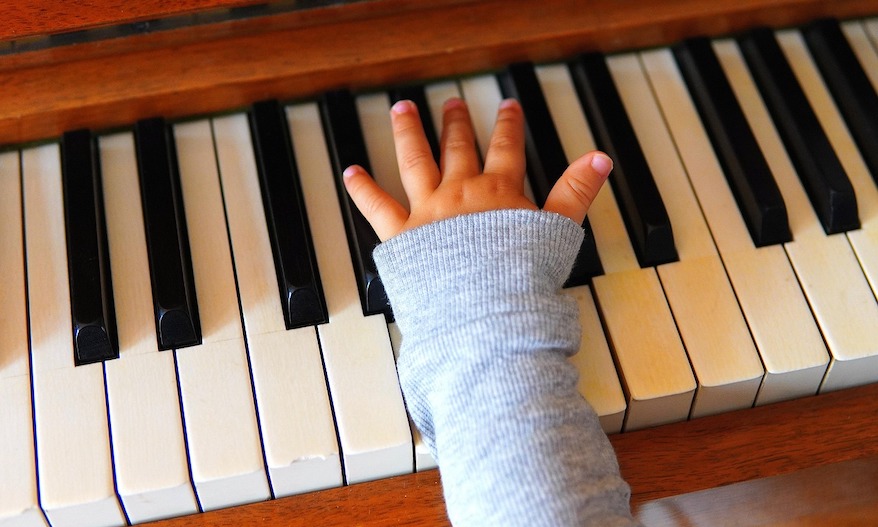
From the moment a child first hears a lullaby, their brain begins to build patterns of rhythm, tone, and emotion. Between birth and age eight, children’s minds grow more rapidly than at any other stage of life and music, when used with purpose, becomes one of the most powerful tools for shaping that growth. At Falcetti School of Music, programs like Tots ‘N Tune, Keys for Kids, and Build a Band are more than music classes, they are developmental laboratories where creativity, learning, and confidence flourish.
Why It Matters
The Power of the Early Years (Ages 0–4)
In the first four years, a child’s brain is forming millions of neural connections every second. These connections are reinforced by sensory-rich experiences like sound and rhythm. Research from the University of Washington’s Institute for Learning & Brain Sciences (I-LABS) found that infants exposed to rhythmic music training displayed stronger brain activity in the regions responsible for speech and self-regulation.
Our Tots ‘N Tune program (Ages 0–4) allows such development by combining rhythm play, singing, and caregiver participation. This program helps infants and toddlers internalize patterns that later support language development and emotional bonding. The musical environment also enhances fine and gross motor skills through movement and instrument exploration, echoing findings from Developmental Science (2017) that show babies engaged in musical play exhibit improved social engagement and emotional stability.
Music in this stage doesn’t just entertain, it establishes emotional safety, sound awareness, and the neural foundation for future learning.hort, when music is shared in a supportive, empathetic environment, it becomes therapeutic. This is exactly what happens in many private lessons whether teachers realize it or not.
The Growth Years (Ages 5–8)
By age five, the brain’s wiring is primed for more complex learning. This is the age when music becomes an integrative force — linking logic, memory, and creativity.
Several studies have found that children who participated in consistent music education showed greater development in the prefrontal cortex with stronger connections between the brain’s hemispheres, correlating with improved reading and math skills. Similarly, a McMaster University (2019) study revealed that preschoolers and early elementary students enrolled in structured music programs demonstrated better verbal memory, focus, and social skills than those without such training.
Programs like Keys for Kids (Ages 5–12) translate these findings into practice. Through engaging piano-based learning, children build early literacy and math readiness by recognizing rhythm patterns and melodic intervals, skills directly tied to cognitive flexibility. The playful, story-driven lessons of Keys for Kids nurture attention, sequencing, and problem-solving abilities while introducing the discipline and joy of musicianship alongside caregivers for a personal experience.
For children drawn to group energy, Build a Band / Garage Bands (Ages 5–12) develop teamwork, creativity, and leadership through ensemble playing. According to a University of Cambridge (2017) study, group music-making increases empathy, cooperation, and emotional awareness. In these bands, those social-emotional lessons come alive; students listen, adjust, and collaborate, forming musical bonds that mirror lifelong interpersonal skills.
If groups are not within a child’s comfort zone, private lessons offer similar benefits in a one on one setting. Here the teacher can create a safe and more personal space for hidden creativity and untapped artistry. .
By age five, the brain’s wiring is primed for more complex learning. This is the age when music becomes an integrative force...
Music isn’t an extracurricular luxury, it’s a developmental necessity. From Tots ‘N Tune to Private lessons, each stage of an education journey supports specific milestones:
• Ages 0–4: Sensory bonding, motor coordination, and speech development.
• Ages 5–8: Cognitive integration, literacy, teamwork, and self-expression.
When parents invest in musical education during these early years, they’re not only cultivating talent, they’re shaping the emotional and intellectual core of who their child becomes.
Closing Note
Between birth and age eight, every beat matters. Each song sung, key pressed, or drum tapped becomes part of a child’s developing language; one that teaches them to listen, think, and feel deeply.
Falcetti School of Music transforms those moments into milestones nurturing the minds and hearts of tomorrow, one melody at a time.
Children’s Development Through Music